
Pond Construction
Pond construction. Shaped around your land.
A livestock pond, a place to fish, or the centerpiece of a rural property. Start with what you want the water to do, then work through the ground, access, and construction it will take to get there.
Discuss your project940-373-2051 · Start with a conversation.
Texas · Oklahoma · Colorado · New Mexico
Projects outside these four states are considered case by case. Scheduling and mobilization depend on the project.
The work
One project. A plan for the whole site.
Ranch & livestock ponds
Discuss water needs, access for maintenance, and how the pond fits the rest of the property. Water availability and the proposed site need to be evaluated before a build is priced.
Recreational ponds
Plan the excavation around your intended use, shoreline access, and the surrounding land. Fisheries, stocking, and aquatic management are separate scopes to discuss with the appropriate specialists.
Clearing & supporting earthwork
Consider the approach road, vegetation removal, excavated material, and surrounding grading together. These details can make as much difference to the job as the pond footprint.
From the field
Experience you can see.
Clearing, excavation, and grading shape what comes next. From opening up the site to moving and placing material, the work follows the ground conditions and the plan for your property.
Explore excavation & grading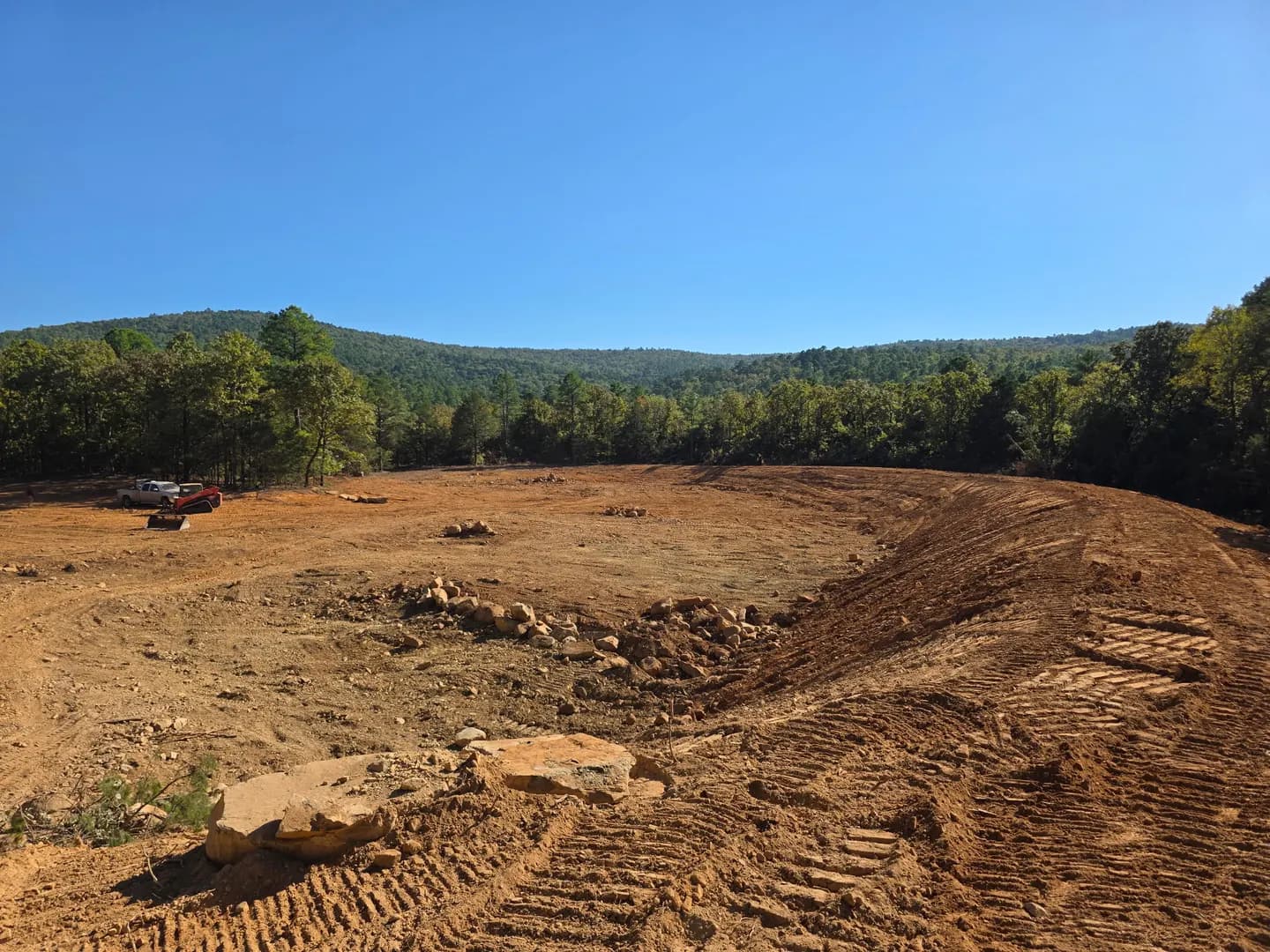
Beneath the surface
How a pond works.
The basin stores water. The earthwork holds it in place. The spillways give excess water a planned way out. This cutaway shows how the main parts of an embankment pond fit together.
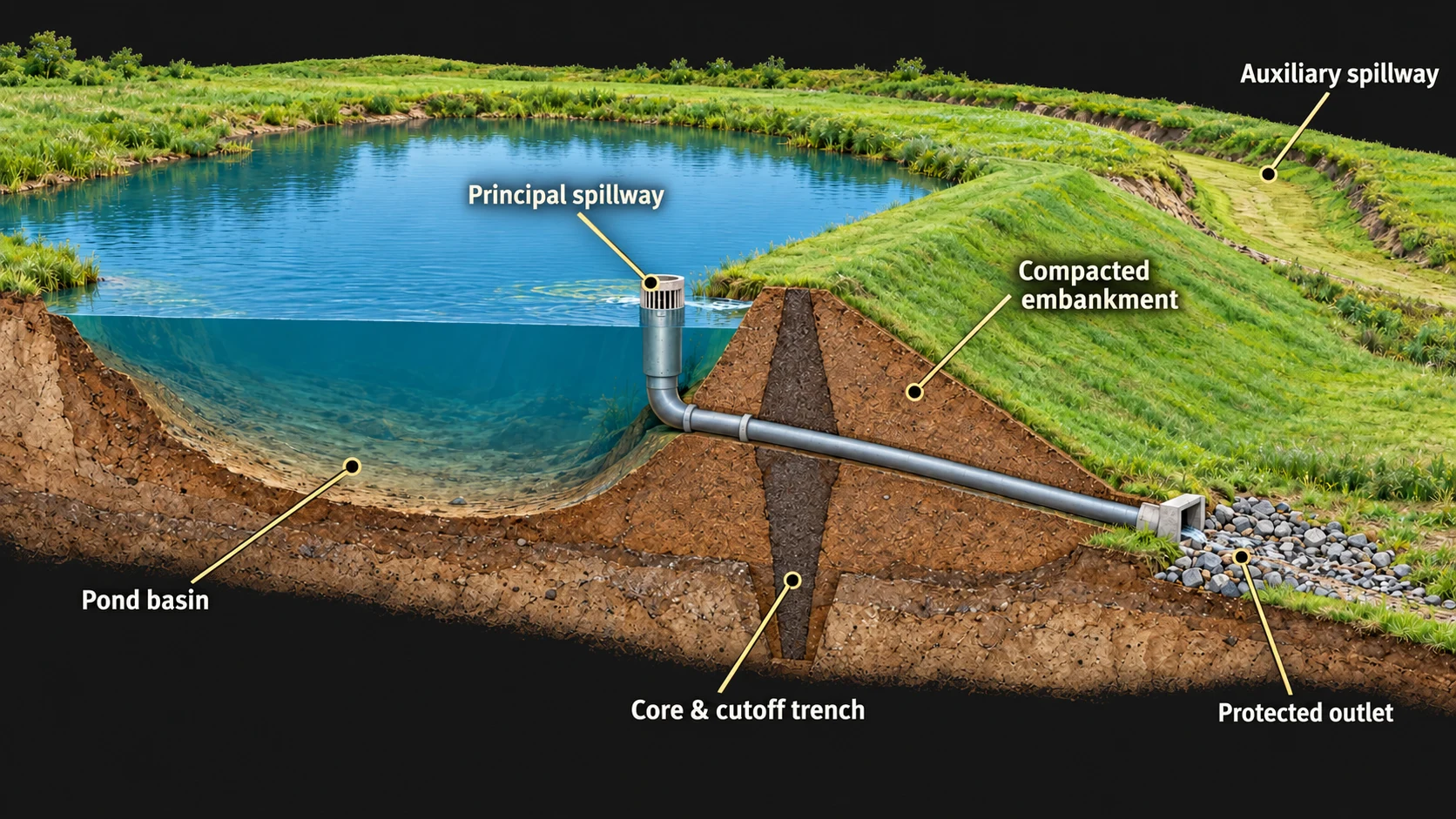
Pond basin
The shaped area that stores water. Its soils, depth, and banks need to suit the site and intended use; excavating a bowl does not by itself make it hold water.
Compacted embankment
The earth dam that holds back the pond. Suitable fill is placed and compacted in controlled layers. Its crest sits above the planned water levels, with freeboard specified in the design.
Core & cutoff trench
A zone of low-permeability material connects the dam to its foundation to limit seepage. The required depth, extent, and material depend on what the site investigation finds.
Principal spillway
The main outlet for ordinary overflow. In this example, an inlet connects to a pipe through the dam. Pipe joints, seepage control, and the surrounding fill need designed construction details.
Auxiliary spillway
A separate route for larger flows, usually around an end of the dam. Its elevation, capacity, and erosion protection are designed so overflow follows that route instead of crossing the dam crest.
Protected outlet
The place where discharged water returns to the downstream ground. Rock or other specified protection helps manage erosion; the outlet must be considered together with the receiving drainage path.
Excavated ponds can have a different layout. Dimensions, water levels, and outlet details are designed for the individual site.
Read the construction guideHow to begin
Know the scope before the first pass.
- 01
Start with your property
Tell us the location, intended use, approximate footprint, access conditions, and whether this is a new pond or work on an existing one. Photos and a marked aerial image help us begin.
- 02
Confirm what the site needs
Soils, water supply, drainage, and any dam or overflow design need site-specific review. We identify which surveys, approvals, and specialist input must be in place before construction.
- 03
Agree on the work
Set a written scope for excavation, material placement, access, finish grading, and mobilization. Clarify who provides engineering, permits, testing, and erosion-control measures.
- 04
Build and document
Carry out the agreed earthwork and record the work as it progresses. Review the finished scope and the owner's next steps for establishing vegetation and maintaining access.
Good questions to ask first.
Can I get a firm pond price from an aerial map?
A map is useful for an initial conversation. It does not reveal subsurface soils, rock, groundwater, or the quantity of earth that must move. A firm construction scope needs site review and any required design information.
Do you work outside your primary service area?
Our primary service area covers Texas, Oklahoma, Colorado, and New Mexico. Projects outside these states are considered case by case. We discuss distance, equipment transport, schedule, and project size before confirming mobilization.
Can you guarantee a pond will hold water?
Water retention depends on soil conditions, construction details, the water source, and the weather. Those questions must be evaluated for the specific site. We do not promise a watertight pond based on a photograph or a map outline.
Who handles engineering and permits?
The required professionals and approvals depend on the location and project. Responsibilities for design, engineering, water rights, permits, and inspections must be agreed in the written scope before work begins.
Plan with a clearer picture.
Tell us what you have in mind.
Bring the location, a few photos, and your goals. We’ll discuss the site, the work, and the next step.