
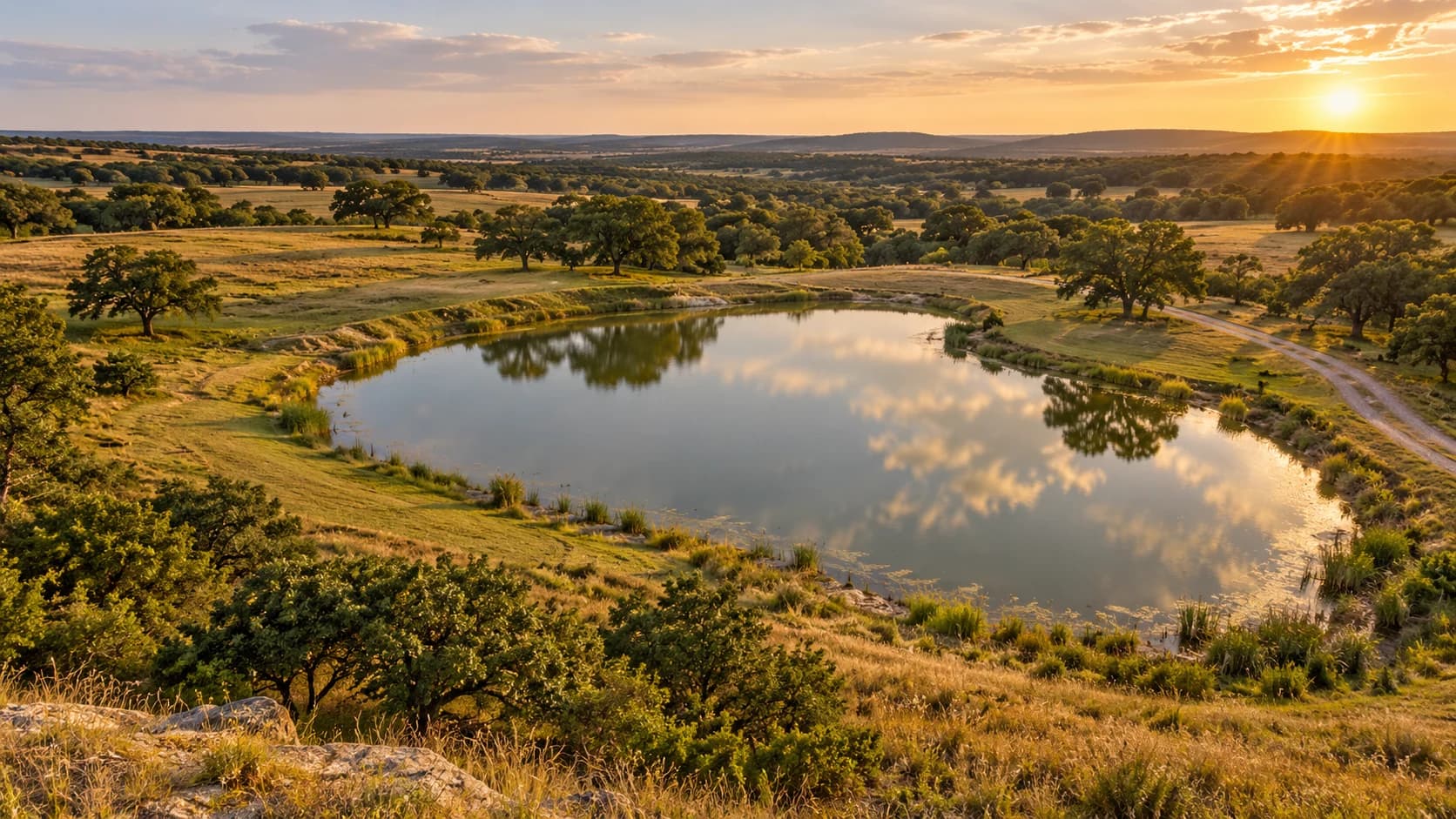
A pond starts as an idea for how to use your land. Turning that idea into a construction scope takes more than picking a low spot on an aerial image. Before calling a contractor, put together a short project brief. It makes the first conversation much more useful.
1. Decide what the pond is for
Write down the main use: livestock water, fishing, wildlife, or a landscape feature near the house. Then list any secondary uses. The priorities may conflict, so decide which comes first. A quiet shoreline for recreation and daily livestock access, for example, raise different questions.
Oklahoma State University’s pond guidance explains why water supply, fish habitat, and livestock access need to be considered together. A fishing pond also needs an ongoing management plan; excavation is only one part of that project.
2. Learn what the site can support
Soil suitability, the contributing drainage area, and the available water source affect feasibility. A surface photograph cannot establish those conditions. Ask what survey, soil investigation, and professional design are needed before selecting a final size or depth.
The USDA NRCS pond handbook describes the investigations behind pond planning. Use it to understand the questions, rather than selecting dam dimensions or spillway details without a site-specific design.
3. Confirm the water and approval path
Owning the ground does not settle every question about storing or using water. Before setting a construction date, contact the relevant water and dam-safety authorities and ask about the proposed site. Requirements vary across Texas, Oklahoma, Colorado, and New Mexico. Our water and permit starting guide links to the appropriate agencies.
4. Include the rest of the property
- Access: How will equipment reach the work area, unload, and turn around?
- Clearing: Which vegetation should go, and which trees or areas must be protected?
- Material: Where can excavated soil be placed? Will any material need to leave the property?
- Connections: Are roads, fences, utilities, buildings, or neighboring properties near the work?
- Finish: What grading, vegetation establishment, and maintenance access belong in the scope?
5. Ask for a scope you can compare
A useful proposal distinguishes the construction work from engineering, permitting, testing, and ongoing maintenance. It should explain what is included, what remains an allowance, and what happens if site conditions differ from the initial assumptions. Read our guide to pond construction cost factors before comparing bids.
What to send for an initial discussion
Start with the property location, a marked aerial image, current photographs, intended use, approximate size, and your timing. Include existing plans or approvals if you have them. A map outline describes surface area; it does not calculate excavation volume or establish a final price.
We welcome pond construction inquiries in Texas, Oklahoma, Colorado, and New Mexico and consider projects outside those states case by case. We discuss the project and mobilization before confirming availability.