
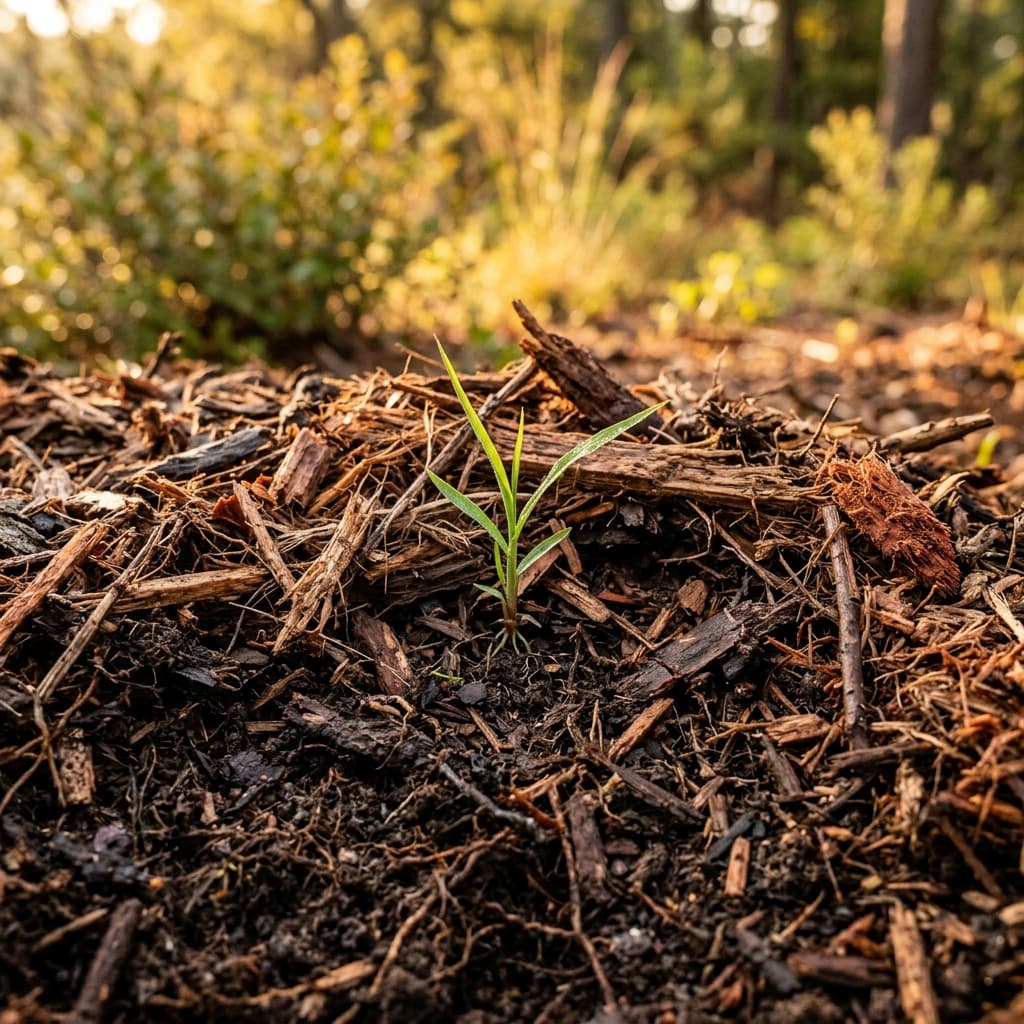
What does the finished surface look like?
Expect a layer of processed wood and vegetation rather than a lawn or a graded pad. Chip size and coverage vary with the material and the agreed finish. Rocks, old ruts, holes, roots, and uneven ground may become easier to see once the vegetation is gone.
Before work begins, explain how you want to use the cleared area. A maintenance trail, a view corridor, and a future lawn need different finishes. Walk the completed work with the operator and identify any remaining obstacles before opening it to vehicles, livestock, or regular foot traffic.
Does forestry mulching remove stumps and roots?
Processing a stump near ground level is different from removing the root system. If you need a specific below-grade clearance, discuss whether stump grinding or excavation belongs in the scope. Do not assume a visually clear area is ready for foundations, trenches, fence posts, or tillage.
For construction, the builder or designer should define how organics and unsuitable material are removed and how the underlying ground is prepared. See our raw-land-to-building-site guide.
Will the brush grow back?
Species matters. Mesquite can resprout when the below-ground bud zone survives top removal. Eastern redcedar behaves differently, but seedling recruitment still makes follow-up important. Identify the plants before choosing a treatment and discuss whether selective grubbing or other management is needed.
Make maintenance part of the original plan. Photograph representative areas after clearing, then revisit them during the growing season. Small areas of regrowth are easier to evaluate before they become dense again. A local extension specialist can help distinguish desirable plants from species needing further treatment.
Can I seed grass right away?
Clearing is one stage of establishing vegetation. Look at the remaining ground cover, mulch distribution, soil condition, intended grass, and planting season. Thick woody material may need additional preparation for the chosen planting method. Ask an extension specialist or agronomist about soil testing, seed selection, and seedbed requirements for your site.
For pasture, agree on establishment and grazing plans before assuming the land can support more animals. Opening the canopy does not establish a stocking rate. Rainfall, existing plants, bare soil, and follow-up management all belong in that decision.
Should the mulch stay or be removed?
Decide by location and use. Leaving processed vegetation can be useful where organic ground cover fits the plan. Building footprints, drainage features, equipment routes, and areas near structures may need a different treatment. Mulch remains combustible; a fuel-reduction project needs a location-specific plan for the material left on site.
A useful handoff checklist
- Confirm the treated boundary and retained trees against the agreed plan.
- Identify stump material, hidden obstacles, and areas needing another trade.
- Confirm what debris remains and where it was placed.
- Record any wet spots, rutting, or exposed soil that needs attention.
- Set the next step: maintenance, seeding, fencing, or excavation.
Bring these finish requirements into your clearing estimate. They are easier to price before the equipment is mobilized.