
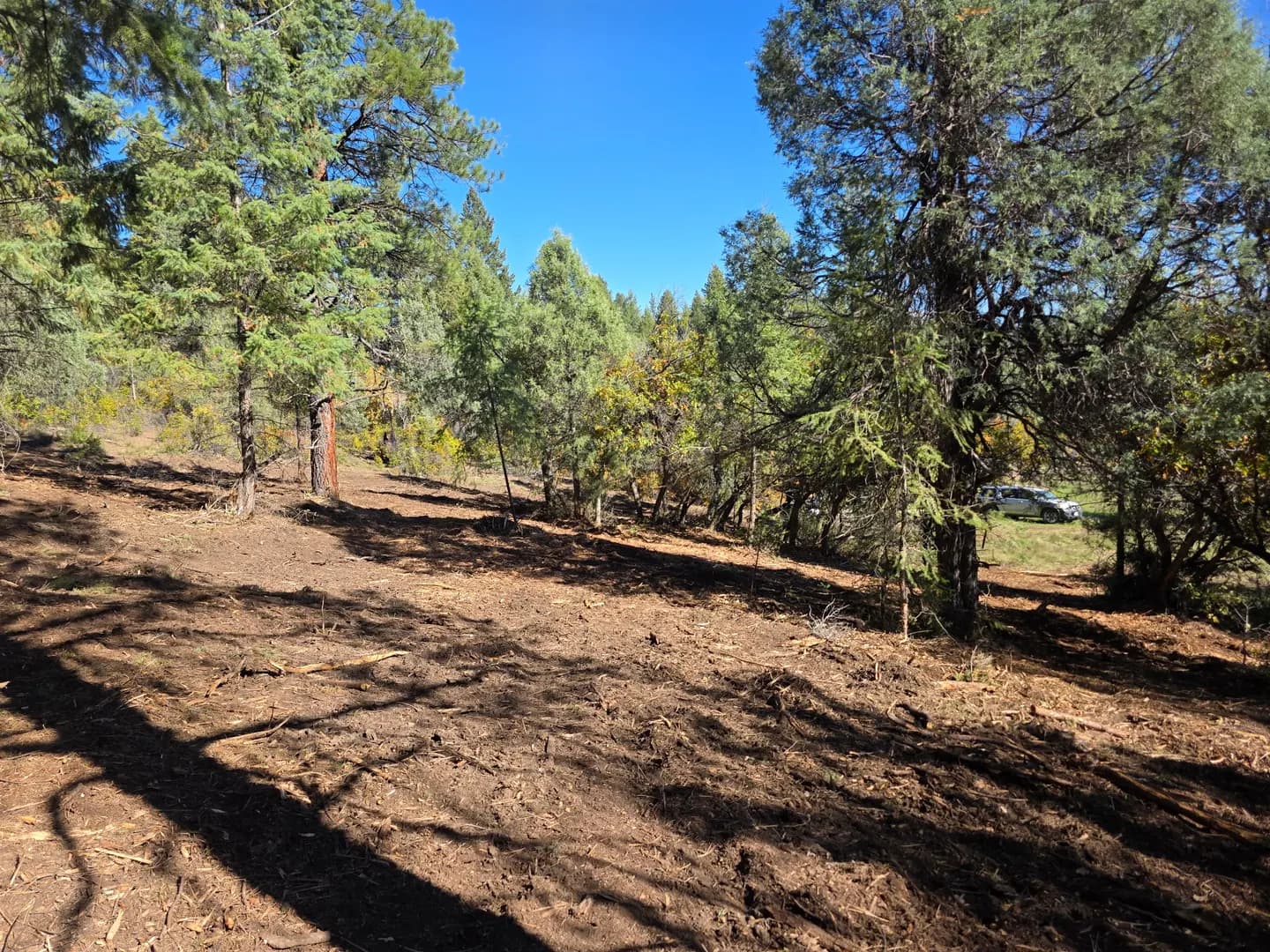
How much will clearing my land cost?
A useful estimate starts with the location, the work boundary, and what you want to do with the land afterward. Two properties of equal size can require very different work. An open stand of small brush with good access is a different job from dense timber, hidden wire, rocky slopes, or a site that needs roots removed and soil reshaped.
We price the defined project after reviewing the information available and identifying what needs a site visit. A statewide average cannot establish your price. Send a marked map and current photos through our remote bid form to start that review.
What should a land-clearing estimate include?
| Cost factor | What to confirm |
|---|---|
| Work area | Acres or linear feet actually treated, with exclusion areas marked. |
| Vegetation | Species, density, tree sizes, and which trees stay. |
| Access and terrain | Gates, unloading space, slopes, soft ground, and rock. |
| Stumps and roots | Cut or mulched near grade, ground down, or excavated and removed. |
| Debris | Material left as mulch, piled, processed, or hauled away. |
| Finish | Vegetation clearing only, or additional grading, testing, and stabilization. |
| Mobilization | Equipment delivery, minimum charges, and return trips. |
Per acre, per hour, or a fixed project price?
Per-acre pricing is easiest to compare when vegetation and terrain are reasonably consistent. Confirm how acreage is measured and whether dense pockets, large trees, and cleanup are included. Do not divide a quote by the entire property size if only part of it is being cleared.
Hourly or day pricing can suit uncertain conditions or a prioritized list of work. Ask what equipment and crew the rate covers, how time is recorded, and whether transport or downtime is billed separately. A lower hourly rate does not establish a lower completed-job cost.
A project price ties a total to an agreed scope. Ask how concealed debris, unsuitable ground, additional acreage, or a changed finish will be handled. Put any allowances and exclusions alongside the price.
Is forestry mulching the cheapest option?
It can reduce material-handling steps when vegetation can remain on site as mulch. That does not make it the right finish for every project. If roots must be removed for a foundation, or the ground must be cut and filled, account for that work before choosing equipment. Our clearing-method comparison explains the differences.
How can I keep the scope within my budget?
- Rank the areas: necessary access first, then the work most important to your intended use.
- Mark retained trees and exclusions before equipment arrives.
- Decide where debris and excavated material can go.
- Coordinate clearing with fencing, excavation, or building work to avoid clearing an area twice.
- Compare a phased plan with completing the work in one mobilization.
What should I send for a remote bid?
Include the property address or location, a marked boundary, wide photographs, closer views of representative vegetation, and access details. State whether the goal is walking access, pasture, a fence line, a driveway, or construction. Tell us about known wire, dumped material, utilities, wet areas, and trees you want to retain.
The map provides an approximate surface area. It does not show everything under the brush or establish excavation quantities. We will discuss what must be checked before confirming the scope. For the finish and maintenance questions to include, read what happens after forestry mulching.